Contents
Serendipities
An accident is not yet a discovery. These six became discoveries because someone stayed with the surprise.
Serendipity is not luck as a personality. It is an observation that fell outside the plan, followed by work that was very much inside a plan. The pages refuse the version in which a holiday or a dream did the science.
A contaminated plate
In 1928 Alexander Fleming noticed that a Staphylococcus plate contaminated with the mould Penicillium had a clear halo where bacteria would not grow. He studied the filtrate, named the activity penicillin, and published it. He did not purify a stable drug or run the trials that turn an observation into a medicine.
That work was Howard Florey, Ernst Chain, Norman Heatley, and their colleagues in Oxford, under wartime pressure, in the late 1930s and early 1940s. The 1945 Nobel Prize was shared by Fleming, Florey, and Chain. The serendipity was the plate. The achievement was everything after the plate.
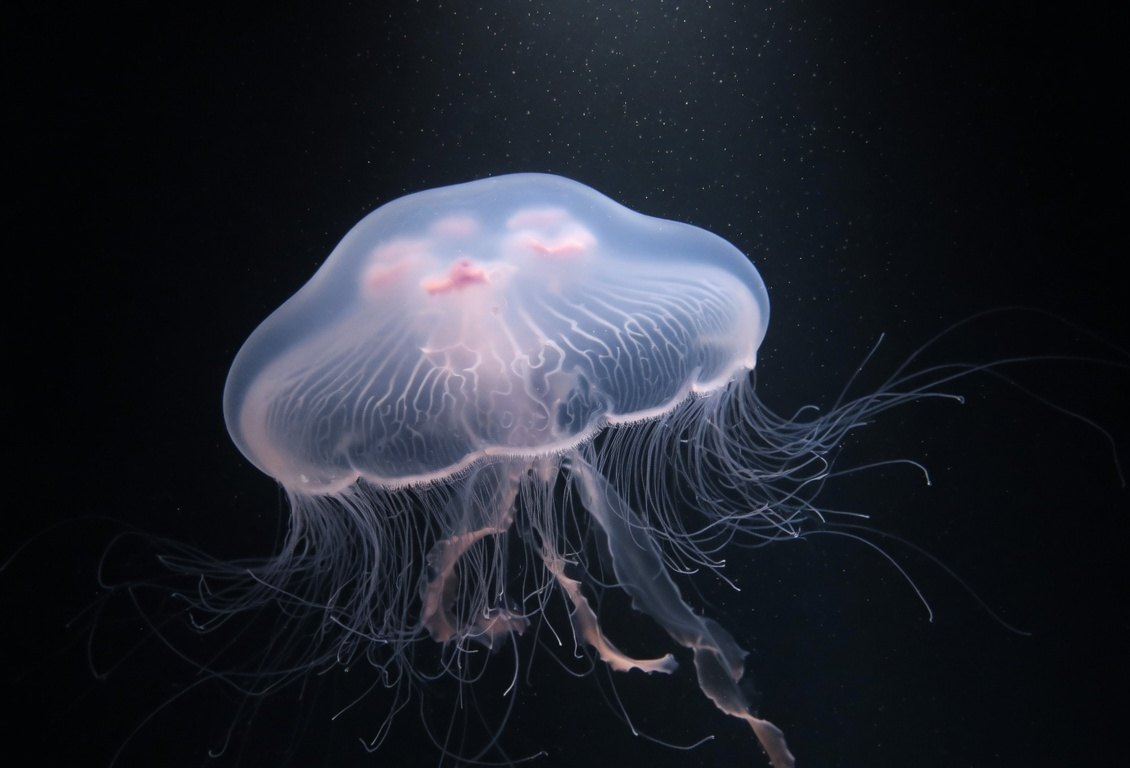
A jellyfish that would not stop glowing
Osamu Shimomura wanted to know why the jellyfish Aequorea victoria glows. Following the chemistry of aequorin, he kept finding a green protein that took the blue light of aequorin and re-emitted it as green. Green fluorescent protein was a curiosity of photochemistry.
Martin Chalfie put the gene into other organisms and watched them glow without adding a cofactor. Roger Tsien altered the protein so the colour and the brightness became a toolkit. The 2008 Nobel Prize recognized all three. Nobody collected jellyfish in Friday Harbor in order to label a neuron. The label was a later idea, and it required the sequence.
A bacterium from a hot spring
Thomas Brock and Hudson Freeze described Thermus aquaticus in 1969 from the hot springs of Yellowstone. They were asking how life manages high temperature. The heat-stable polymerase of that bacterium was characterized later. When Kary Mullis’s polymerase chain reaction kept destroying ordinary polymerase at the melting step, a heat-stable enzyme turned a clever cycle into a routine one.
Brock was not trying to invent a diagnostic industry. The industry was possible because someone had taken a thermometer to a microbe. The experiment pages are full of this pattern: answer the question in front of you, and leave the reagent labeled for a stranger.
Cattle, spoiled clover, and a blood thinner
In the 1920s cattle in North America bled to death after eating spoiled sweet clover. Frank Schofield traced the illness to the hay. Karl Paul Link’s laboratory in Wisconsin isolated the responsible molecule, dicoumarol, formed when coumarin in the plant is moulded into a vitamin-K antagonist. A more potent derivative was named warfarin, after the Wisconsin Alumni Research Foundation, and was used first as a rodenticide and then, carefully dosed, as an anticoagulant medicine.
The path runs from an agricultural disaster to a clotting pathway. Nobody looking at a dead calf was searching for a drug. They were searching for the cause of the deaths. The drug was the cause, understood.
Ulcers were not a personality flaw
Stomach acid was supposed to make the stomach a sterile vat. Stress and spicy food took the blame for ulcers. J. Robin Warren kept seeing curved bacteria in gastric biopsies, sitting under the mucus. Barry Marshall joined him. In 1984 they published the association. Marshall drank a culture, developed gastritis, and recovered the organism, a brutal but clear test of Koch’s logic on himself. Helicobacter pylori is now a known cause of peptic ulcer and a risk factor for gastric cancer. The two shared the Nobel Prize in 2005.
This is serendipity only in the first look down a microscope at a specimen taken for another reason. The self-experiment was the opposite of an accident. It is also not a suggestion that you repeat it. The biology is settled enough to be in textbooks; treatment belongs to a clinician.
Odd repeats that were a memory
In 1987 Yoshizumi Ishino and colleagues, sequencing a bacterial gene in E. coli, noted strange repeated DNA nearby and said so, without a function. Francisco Mojica found similar repeats in archaea and would not let the pattern go. Years of comparative genomics showed that the unique stretches between the repeats matched viruses. The repeats were a scrapbook of infections.
Philippe Horvath, Rodolphe Barrangou, and colleagues showed that the system is an adaptive immune defense. Jennifer Doudna, Emmanuelle Charpentier, and their coauthors then made the cut programmable. The highlight and the contribution note carry the later story. The lesson for a student is smaller: report the band you cannot explain. Ishino’s paper did.